It’s been a few weeks since I sowed the late summer sowings. The Chinese cabbage, cauliflower, kale, spring cabbage and fennel are now seedlings and ready to be planted out in my raised beds.
However anything from the Brassica family i.e Cauliflower, Cabbage, Chinese Cabbage and Kale still needs to be planted under netting in September and throughout winter. This is to protect against cabbage white butterflies (which are still around until the first frost) and pigeons.
Vegetable Cages
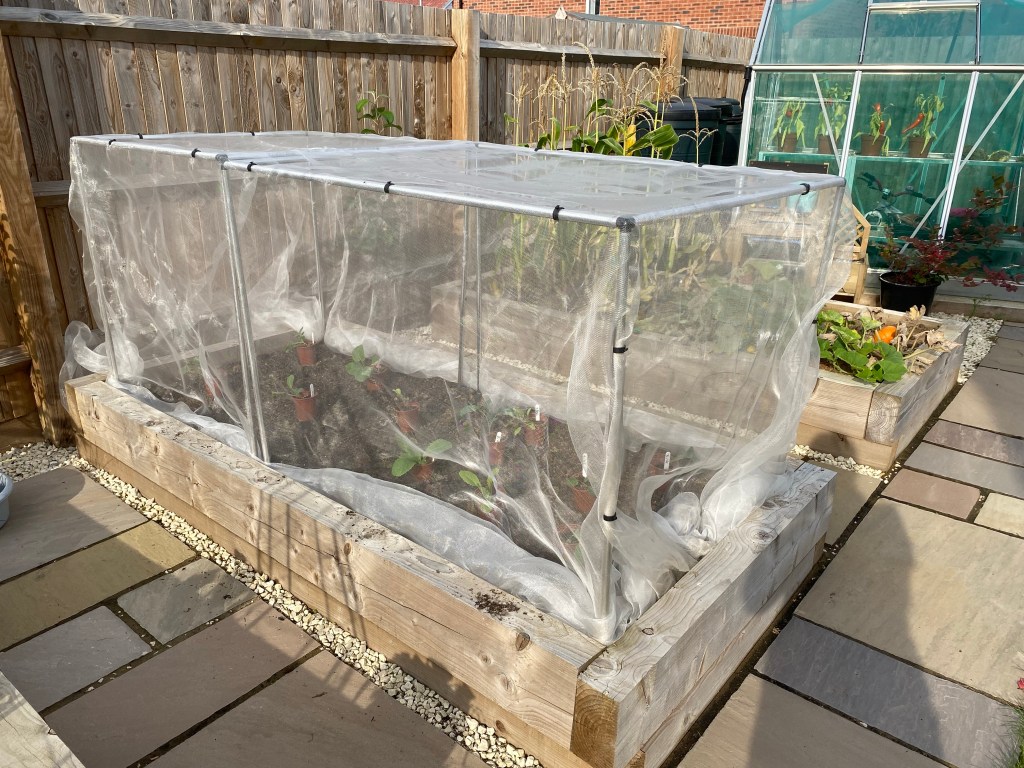
You will need a Vegetable Cage for growing brassicas. Over the years I have tried a few different types of vegetable cage. They can be created cheaply from blue flexible water pipe or you can invest in aluminium poles which last years, all dependant on your budget.
I’ve invested in the aluminium poles, corner brackets and ground spikes. I’ve had these for a number of years now so I feel they are great value for money.
Advantages of using Aluminium poles for a vegetable cage
- 1. Aluminium poles are lightweight so it’s easy to assemble and take apart. The poles can be stored in the corner of your shed.
- 2. The aluminium poles are robust, there’s no rusting and I’ve used ground spikes so no soil goes inside the tubes. This will help the longevity of the poles.
- 3. The netting can be clipped over the frame with plastic clips which makes the cage system look neat and tidy.
- 4. The silver aluminium poles do not look out of place or stand out especially if you also have a metal greenhouse.
- 5. The aluminium poles last years without needing replacement therefore they are excellent value for money.
Stockist: I bought my aluminium vegetable cage from Garden Naturally in the UK.
Netting Stockist: I got my netting ‘Agralan Environmesh Fine Insect Vegtable Netting’ from Pest Free Gardening.
Planting Seedlings in Raised Beds for Autumn to Spring Harvest
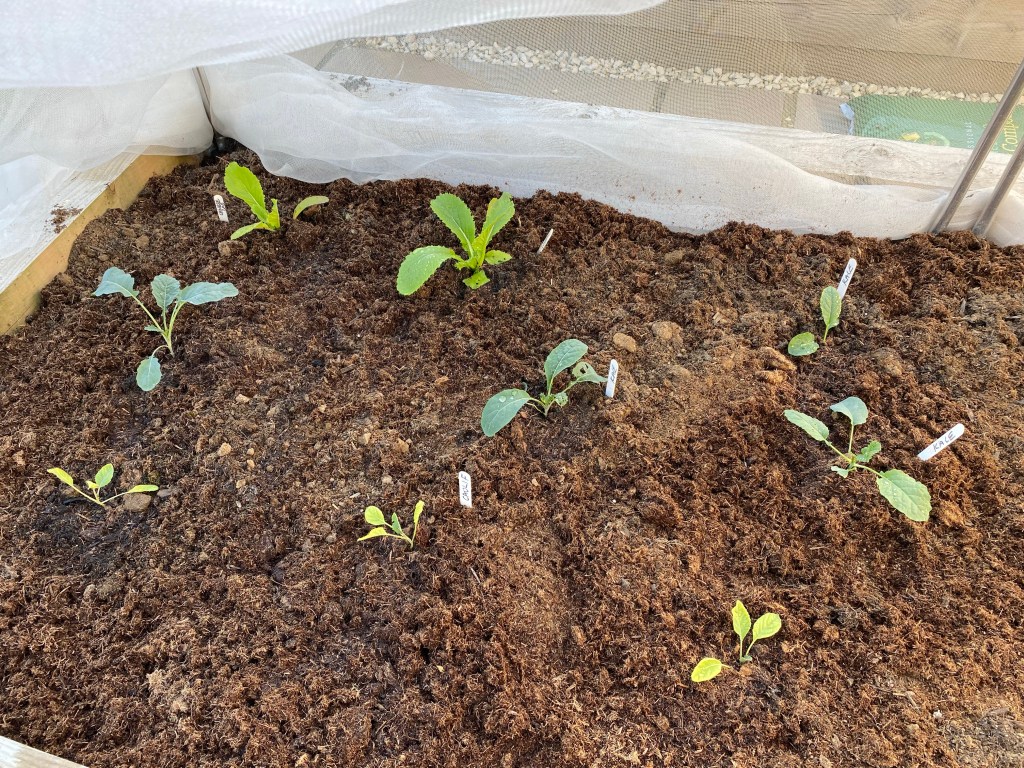
If your raised beds have already been home to some hungry feeder vegetables during the Summer, the soil will require more nutrients before you plant out more seedlings.
My raised bed was home to my ball courgette plants, kohl Rabi and broccoli plants which are all hungry plants, the soil will have been depleted of nutrients.
I’ll be planting:
- Spring Cabbage x 4 plants,
- Kale x 3 plants,
- Chinese Cabbage x 2,
- Cauliflower x 3.
1. Add more Nutrients to the soil.
I top up my Raised beds with Peat-free compost made from coir (not bark). Empty the bag of compost into the raised bed, spread it evenly across the surface.
2. Lay out your plants in pots.
To get a feel for spacing, put your pots on top of the soil with enough space in between to allow for growth. Also try not to plant to close to the netting.
3. Check your plant leaves for pests.
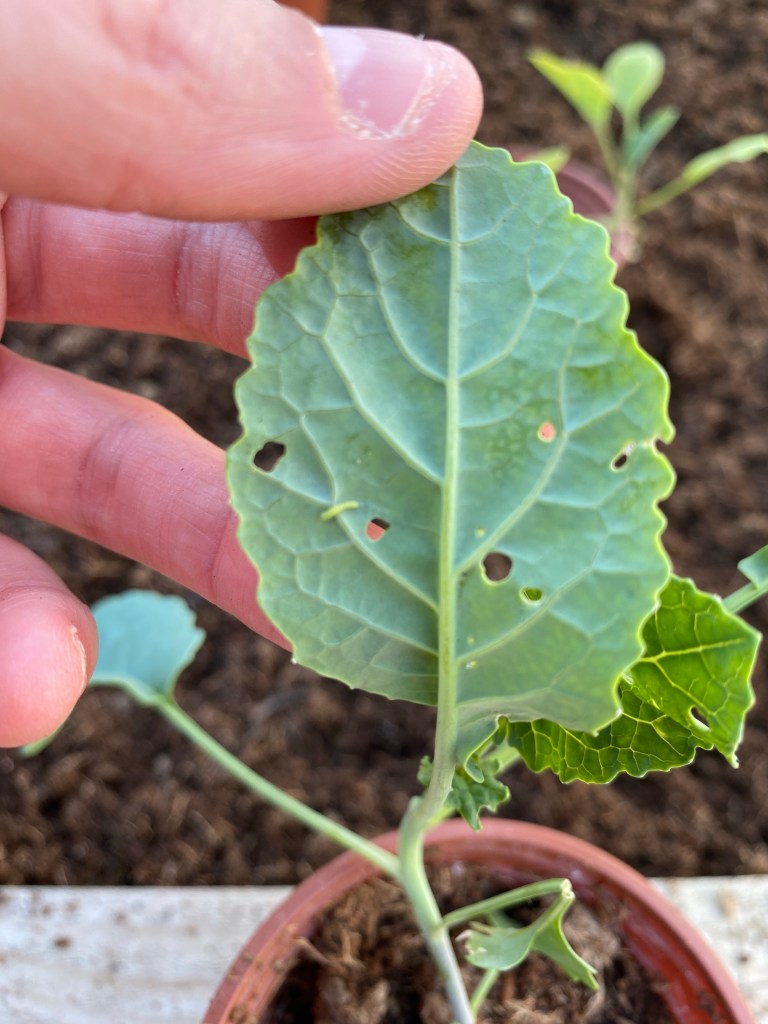
This is an important step to make sure you check the underside of your plants leaves and in the centre of the stem where the leaves come out for pests.
In the late summer, pests will be tiny green caterpillars, aphids or blackfly. These must be squished to remove them from leaves otherwise your plants will be eaten under the netting.
4. Plant your vegetable plants into the raised bed.
Dig a hole, take your plants out of their pots, tease the roots apart and put in soil. Pull the soil and new compost back around the plant and push down gently to firm soil around plant.
5. Don’t forget to water your plants.
Water in your new plants and continue watering them every couple of days until established.
6. Cover the cage with netting.
Clip the netting and peg it down into the soil, to prevent any cabbage white butterflies from gaining access.
7. Check you plants daily for pests.
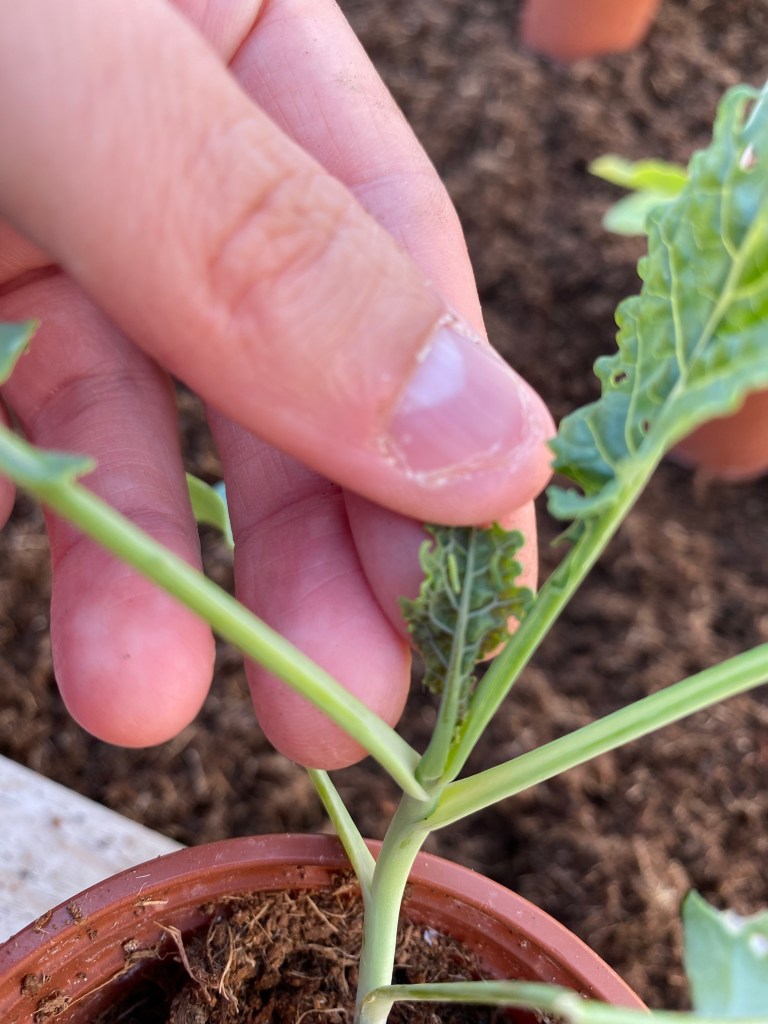
Check through the netting whether any holes have appeared in your plants leaves. If you are not sure, open the netting either at the beginning or end of a day (when there’s less butterflies around) and check the underside of your plant leaves.
Read More
This post is an update to my original post – Seeds to sow in a July and August for Autumn – Spring Harvest.
Update: We have Autumn Cauliflowers



 sowgrowharvest.co.uk
Leave a comment