Here is a helping hand to let you know what diseases your plants may suffer with if you are growing tomatoes and common solutions.
1. Blossom End Rot
What is Blossom End Rot? This is a disease where the bottom of the tomato rots before or after the tomato is fully formed.
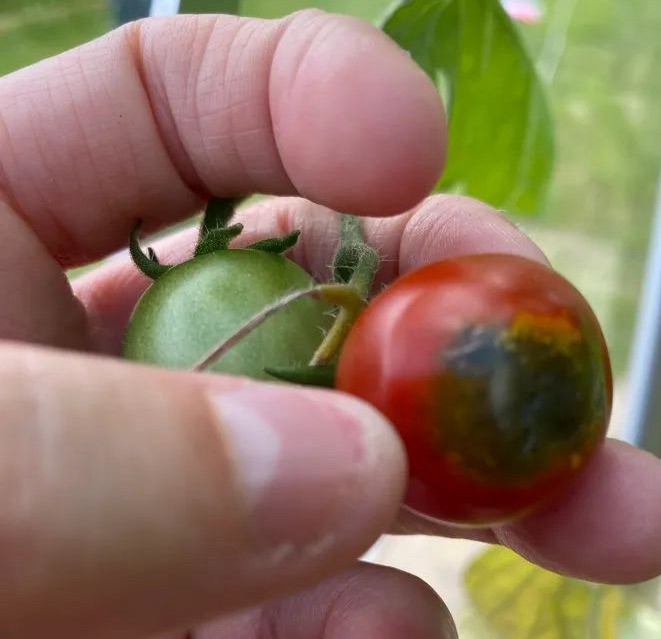
What does the Tomato look like if it has Blossom End Rot? Blossom End Rot looks like a bruise on the bottom of the tomato and it’s normally brown or black in colour.
Here’s what Blossom End Rot looks like:
What causes Blossom End Rot? It is a deficiency in Calcium in the soil.
How do I fix the Calcium deficiency in the tomato soil?
- Add Liquid Tomato Feed mixed with water as this contains Calcium.
- Add eggs shells, lime or blood, fish and bone to the soil to help replace the Calcium.
What should I do with the tomato with Blossom End Rot on? Remove it from the plant and only eat the clean part of the tomato.
Will Blossom End Rot spread to other tomatoes on my plant/s? No, you may be lucky with only one or two fruits having this disease and then the rest of the plant may be fine.
2. Yellow Leaves
Yellow Leaves on the plant could be over or under watering. Tomato plants need consistent watering.
If you are watering properly, then yellow leaves could only mean one thing, a nutrient deficiency.
What nutrients are my Tomato Plants deficient off?
- Blotches or Spots on Yellow Leaves = Magnesium.
- Older Leaves on plant turning yellow = Nitrogen.
- New leaves with yellow edges = Potassium.

Tomato plants are very hungry and when it’s time for fruits to appear, the plant will need a huge boost of nutrients from the form of a weekly liquid feed or fresh compost.
If your tomato plant it still sitting in a pot or Growbag of compost from when you planted it into about two months ago, this is why your plant is stressed, it needs more nutrients to grow and ripen the tomatoes.
What is the solution to getting rid of Yellow Leaves?
- Add compost around the tops of the pots or grow bag and water so the nutrients go down into the roots. This is a quick fix solution as in a few weeks it will be nutrient deficient again.
- Feed with Liquid Tomato feed every week mixed with water. Liquid tomato feed contains Nitrogen, Magnesium and Potassium which will top up your tomato plants nutrients.
3. Powdery Mildew
What is Powdery Mildew? Powdery mildew is a fungal disease of the leaves. Lots of different vegetables can get powdery mildew including Tomatoes.
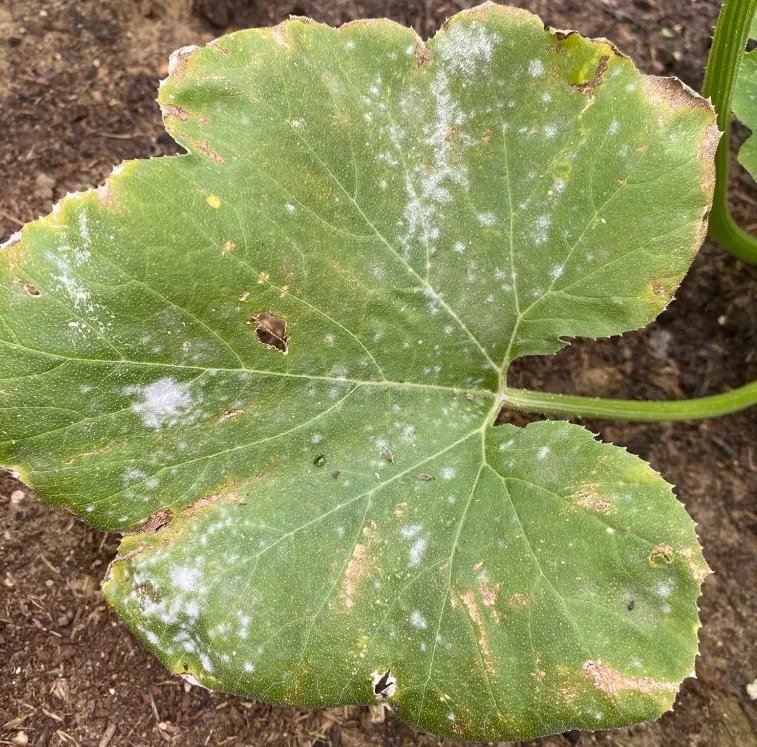
What does Powdery Mildew look like? White spots on a plants leaves. It looks like talcum powder.
Here’s what Powdery Mildew Looks like:
What causes Powdery Mildew? Humidity, high temperatures, lots of water and poor air circulation are the perfect conditions to breed the fungus that is powdery mildew.
The fungus lives in the soil or bark and can be splashed up or moved by wind onto the plant leaves.
Sometimes the weather can cause powdery mildew and sometimes it’s the growing conditions or overwatering.
What Season is Powdery Mildew most common in? Summer
What is the solution to getting rid of Powdery Mildew?
- Remove by cutting off the leaves with Powdery Mildew on them. Do not remove all the leaves as it still needs some to photosynthesise and grow.
- Water or rain can wash off the spores before they have chance to stick to the leaves.
- 1 tablespoon of baking soda. 1 teaspoon of washing up liquid and 1 gallon of water, mix well and use a spray bottle to apply to the leaves.
- Neem oil.
Will Powdery Mildew spread to other leaves on my plant/s? Yes, the spores are carried by the wind so can infect other leaves close by.
4. Fusarium Wilt
What is Fusarium Wilt? It is a fungal disease found in the soil of tomato plants. It can stay in the soil from 5 – 10 years.
What does Fusarium Wilt look like on plants? Yellow leaves that shrivel up and go brown. The stem goes a reddish brown colour and dies and the whole plant wilts.
What is the solution to getting rid of Fusarium Wilt?
- Unfortunately no chemical can remove the disease.
- Remove the plant and don’t plant anything else in the soil. Remove the soil and replace with new soil.
5. Blight
What is Blight? It is a fungal bacteria which infects the leaves on tomato plants. Blight can also occur on potato plants.
What causes Blight? Mild and humid weather is perfect conditions for fungal bacteria to grow and infect plants.
What does Blight look like? Brown spots on leaves & stems in rings. It also causes leaves to wilt and rot over the entire plant.
Blight is very contagious to other plants.
What is the solution to getting rid of Blight?
- Dispose of plant stems and leaves in the general waste bin and do not compost.
- Fungicide.
The Tomato Series:
Part 1 📕 Tomatoes – Origin, Nutrition and Reasons to Grow.
Part 2 📗 Tomatoes – How to Sow Tomato Seeds + Sowing Video
Part 3 📘 Tomatoes – How to Choose a Tomato Variety to Grow
Interesting Veg – White Tomatoes
Part 4 📙 How to Pot On your Tomato Seedlings
Part 5 📔How to Care for your Growing Tomatoes
Part 6 🌱 Tomatoes – Common Diseases & Solutions
Part 7 🍅How to Harvest a Tomato
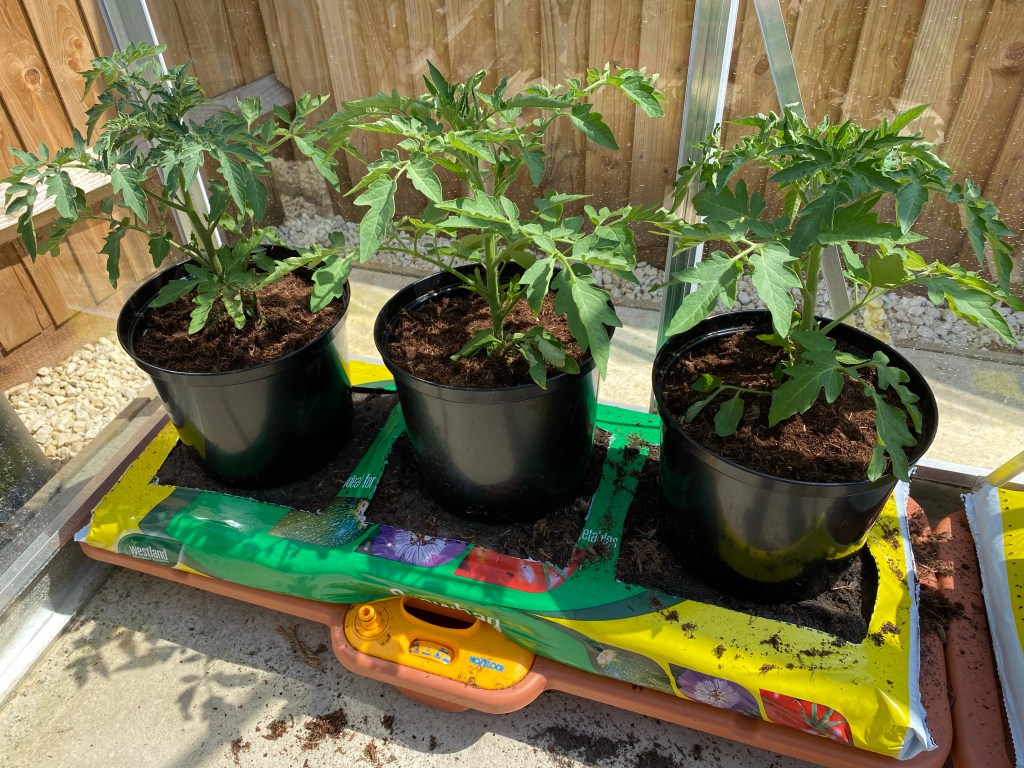
💦 My Tomato Greenhouse setup with Growbag watering system– l’ll be using this again this year as it was so successful.
Top 3 Tips on Getting your Tomatoes to turn Red
🍅 And Finally… The Italian Job – Tomato Harvest – last year’s Italian tomato harvest.



 sowgrowharvest.co.uk
Leave a comment