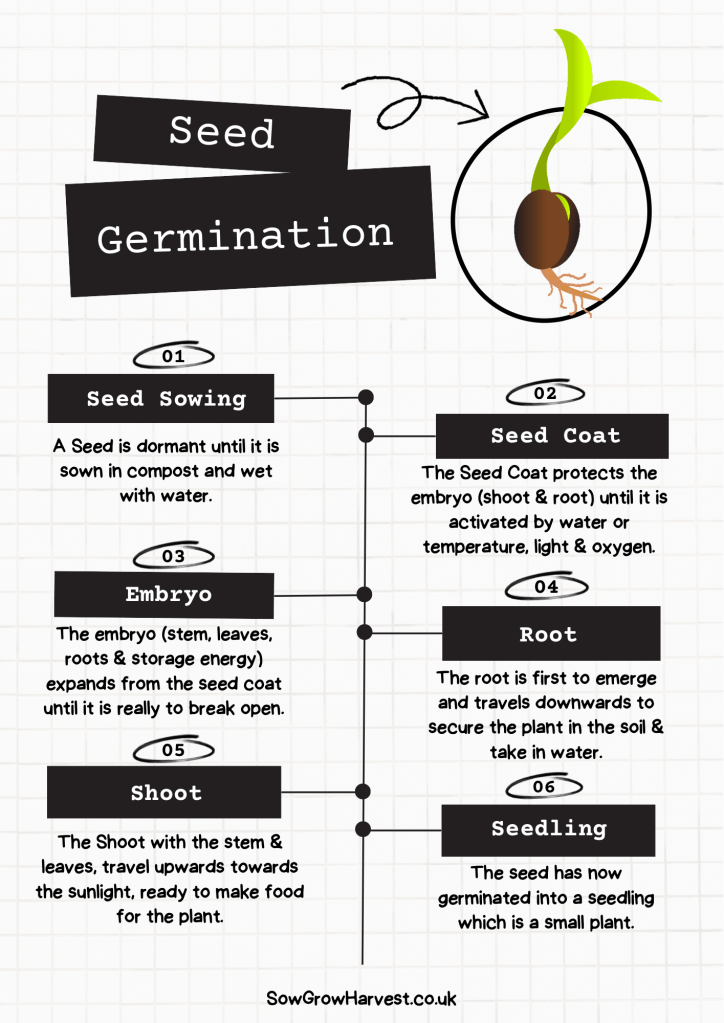
A Seed is a small or tiny packet of a shoot (stem & 2 leaves), roots and food energy which enables it to burst into action when activated by water and oxygen.
The seed needs to be planted in compost that is wet so that the seed coat can take in water to swell up the embryo and let the roots, shoot, stem & leaves break free from the seed coat.
How long does it take for Seeds to Germinate?
On average Seeds take 2 – 3 days to absorb water into the seed coat to start the activation or germination process.
It takes between 5 days and 3 weeks for seeds to germinate, depending on the size of the seed and the germinating conditions. On an average it takes 5 – 10 days.
Small Seeds
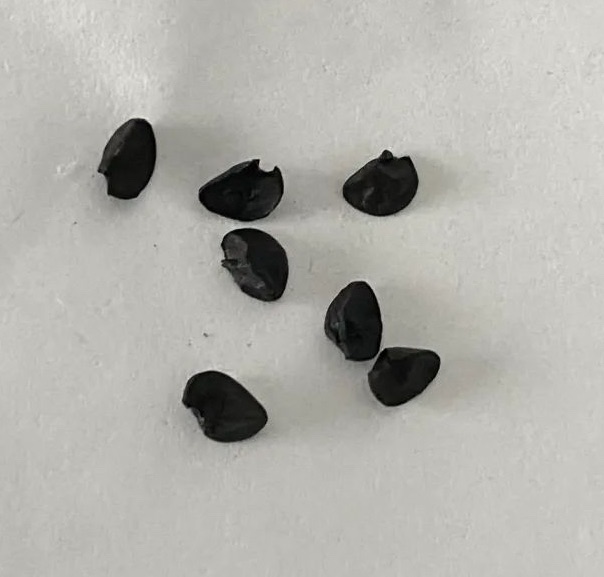
Small seeds germinate quicker than larger seeds. Small seeds also grow faster initially because of the energy stores and the water in the soil.
Large Seeds
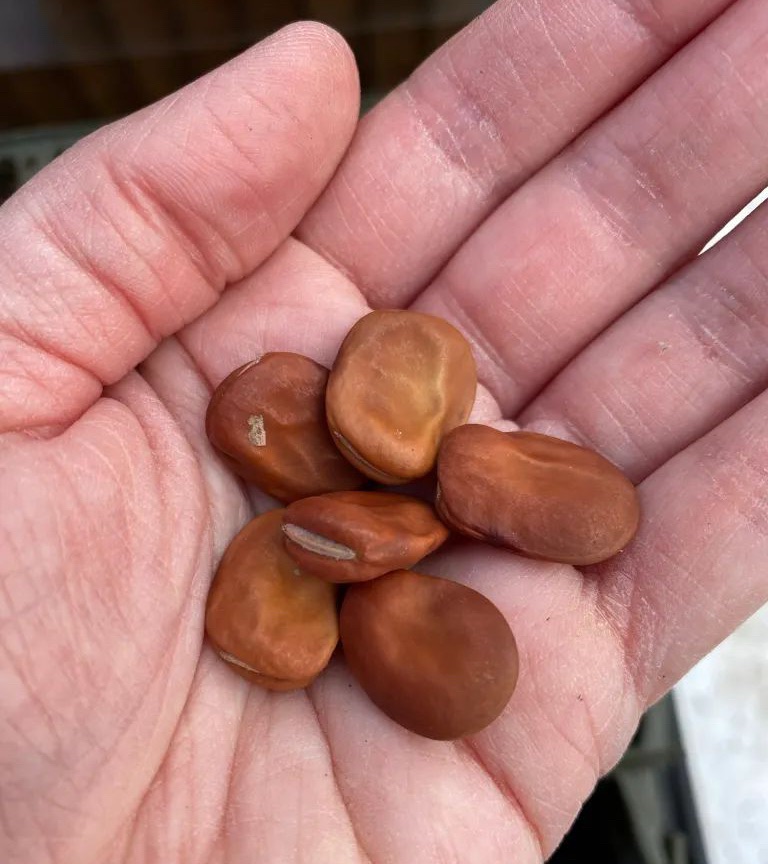
Larger seeds will take longer to germinate. Some seeds make need to be soaked, or their seed coat scratched to enable them to start the germination process.
Larger seeds will when germinated, will grow vigorously as they have more stored energy than smaller seeds.
What are the Best Conditions for a Seed to Germinate?
1. Moisture
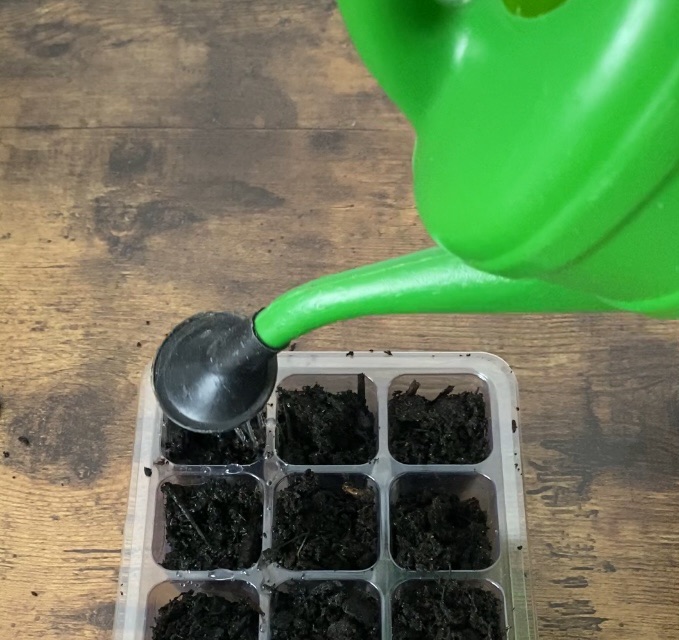
When you sow a seed onto wet compost or soil, you are setting off an activation process in the seeds coat, that allows it to come out of dormancy and start growing.
If there’s no moisture, the seed coat does not activate.
This is also why you should store your seeds in a cool dry place so that your seeds remain dormant.
Top Tip – Water the compost before you sow your seeds.
This way once you place the seed on top of the wet soil, you can guarantee the germination process with begin.
2. Temperature
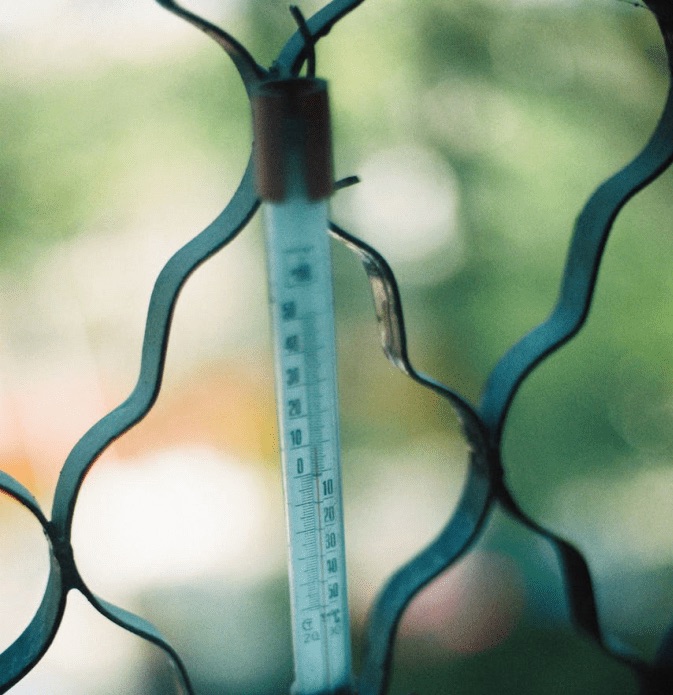
Seeds need warm temperatures to germinate.
The soil or compost gives some insulation against the cold but the optimum temperature for seed germination is between 18 degrees centigrade and 24 degrees centigrade.
Top Tip – Cold can stop your seeds from germinating.
Make sure your seeds are somewhere warm with light, on an indoors windowsill in a warm room.
3. Light
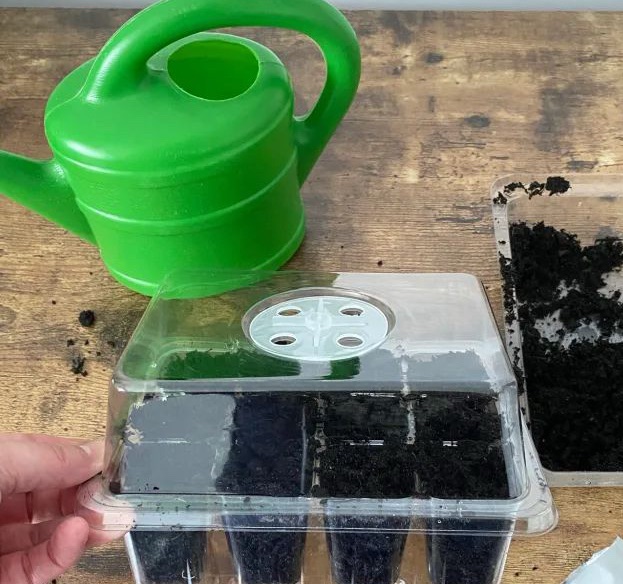
Most vegetable and flower seeds actually germinate in the dark I.e under compost except Lettuce, snapdragons and begonias.
It is very important that when the seeds germinate that they get the maximum amount of light available to grow.
The light and sunlight is what fuels their growth in the form of harvesting sunlight and storing it as food energy in the plant to grow more leaves, roots and a taller, thicker stem.
Top Tip – New Seedlings need the maximum amount of light.
Place on the brightest light windowsill you have and turn the tray every few days to stop your seedlings leaning towards the light and get them growing mostly straight.
Germination Issues
Here are a few common germination issues to take note of:
- Seed sown too deep – seed may not have enough energy to get through the soil to the light,
- Sown too shallow – if sown outside wildlife, rodents or birds may get to seeds and remove them before they can germinate.
- Not enough moisture – seeds need wet soil to activate the germination process.
- Too much water – seeds can rot in compost or soil, if there has been too much water added.
- Seed not of good quality – Some seeds won’t germinate if they are not good quality.
- Temperature is too hot – Seeds cannot germinate in very hot temperatures.
- Temperature is too cold – seeds cannot germinate in the freezing cold temperatures.
- Not enough light – Seedlings will be stunted or not grow properly if there is not enough light.
The Beginner Hub
Seeds To Start Sowing Indoors in January
How to Create a Simple Seed Sowing Setup Indoors
Benefits of Growing Vegetables
Sow Onion Seeds With Me – Video & Sowing Demonstration



 sowgrowharvest.co.uk
Leave a comment