I actually prefer growing Brassica’s during the Autumn and Winter. It’s so much easier with no caterpillars and no whitefly pests to deal with.
It’s as easy as planting out, leaving them to grow and checking for cauliflowers every month or so.
Let’s find out how the Brassica Raised Beds have been doing since October, it’s now Mid December.
Update on Brassica Raised Beds – 2.5 months after Planting
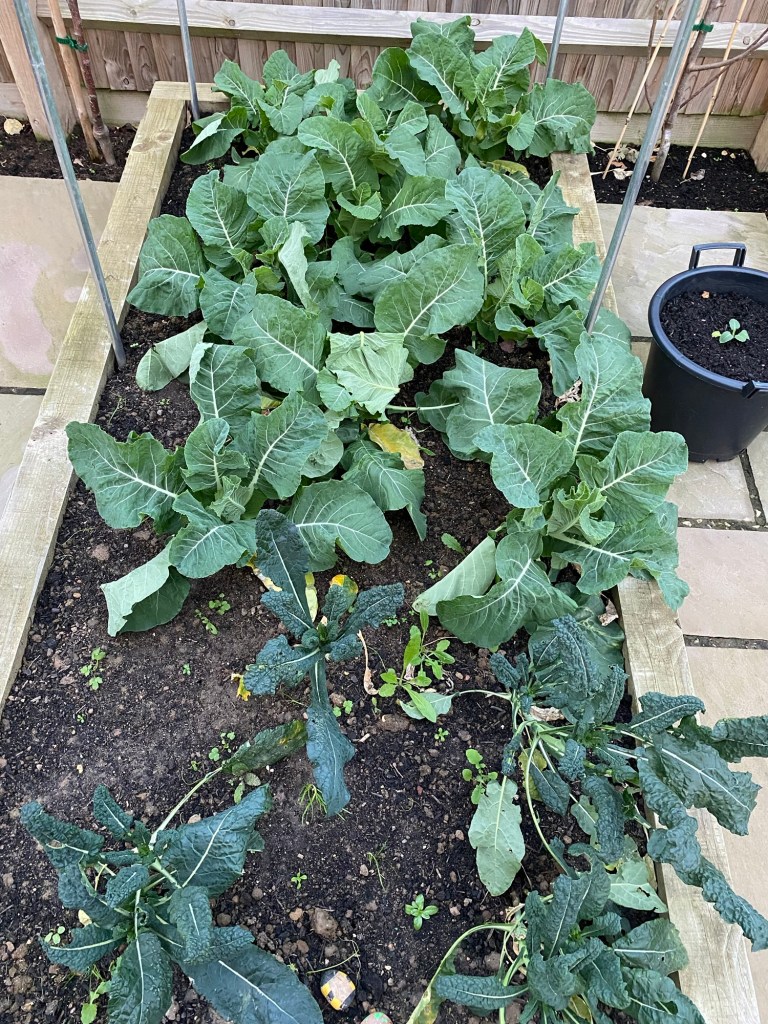
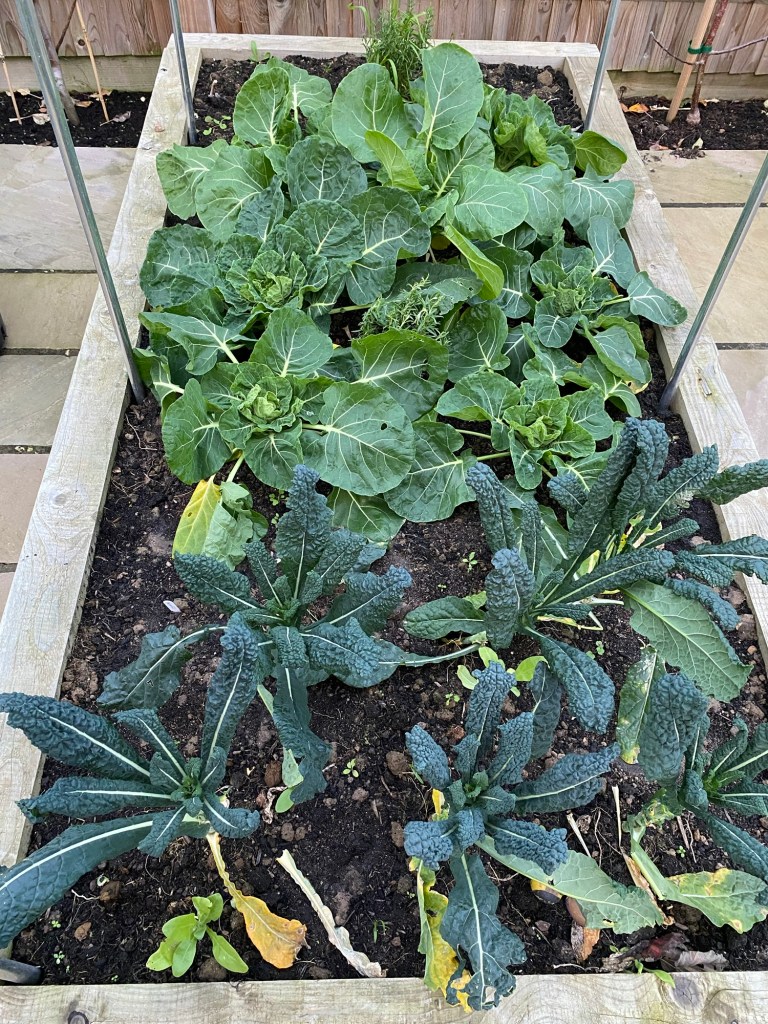
- Cauliflower – one with curds, one tiny one forming.
- Kale – growing new leaves and harvesting.
- Brussels Sprouts – putting on lots of leaves in the centre, tiny sprouts forming on stem, hasn’t started growing upwards yet.
- Spring Cabbage – potted on very late, still growing slowly in pots.
Kale Harvest
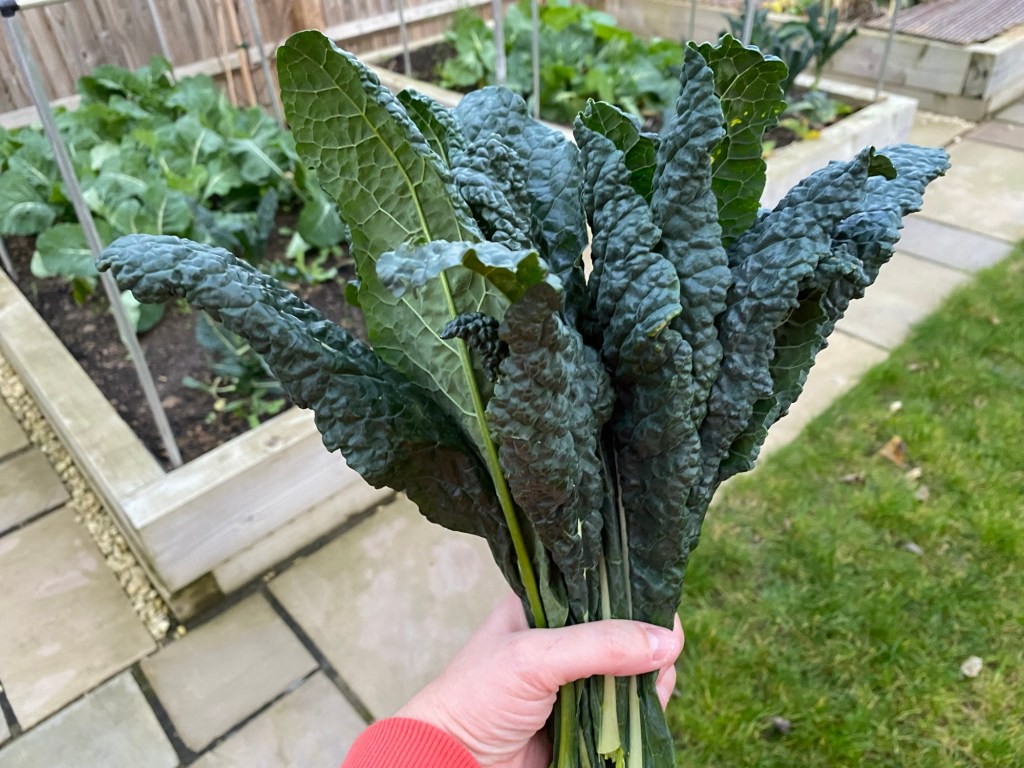
Ever since I found that growing Kale is easy, I always grow it during the autumn and winter because it only takes about 1 – 2 months to grow and then it’s ready for harvest.
I love Black Kale over Curly Kale because it’s so flavourful, there’s something magical about the crinkly bubbly leaves.
Reasons to Grow Black Kale
- It’s very nutritious, it has a high level of Vitamin C which is great for the immune system in the Winter to fight colds.
- It’s got a fantastic flavour, a sweetness, an earthier tone, and a cabbage flavour, if boiled, fried or roasted. It is slightly bitter if eaten raw.
- It’s easy to grow, leaves can be harvested and the plant left in the ground to grow more leaves.
- It’s visually appealing in the vegetable garden, although it’s a very dark green in colour (almost black), the bubbled leaves and V shaped plants make it an interesting attraction.
- It grows in the coldest of climates and still produces leaves for harvests.
- It’s easier to harvest than a cabbage, with Kale, just take off leaves as you need to eat or cook them. More leaves will grow for more harvests from October to March.
Autumn Cauliflower is Here!
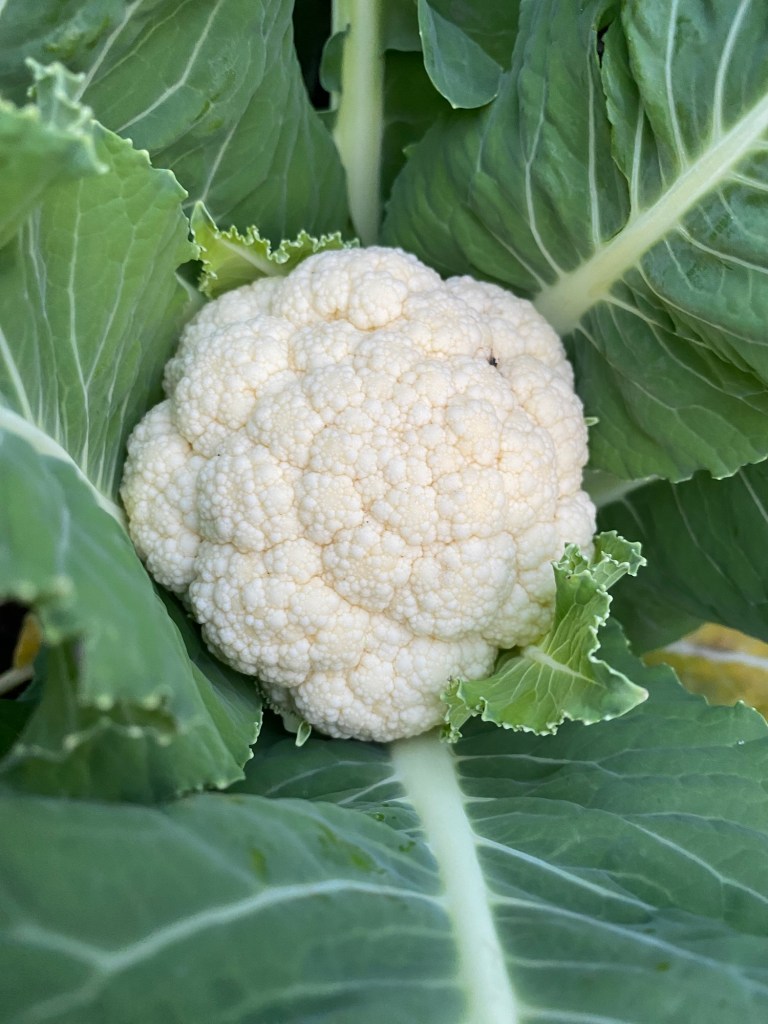
Yippeee! I have Cauliflower! What a lovely specimen.
There might still be a chance of Cauliflower Cheese in December, one of my goals in Challenge Brassica – Part 1. Fingers crossed!
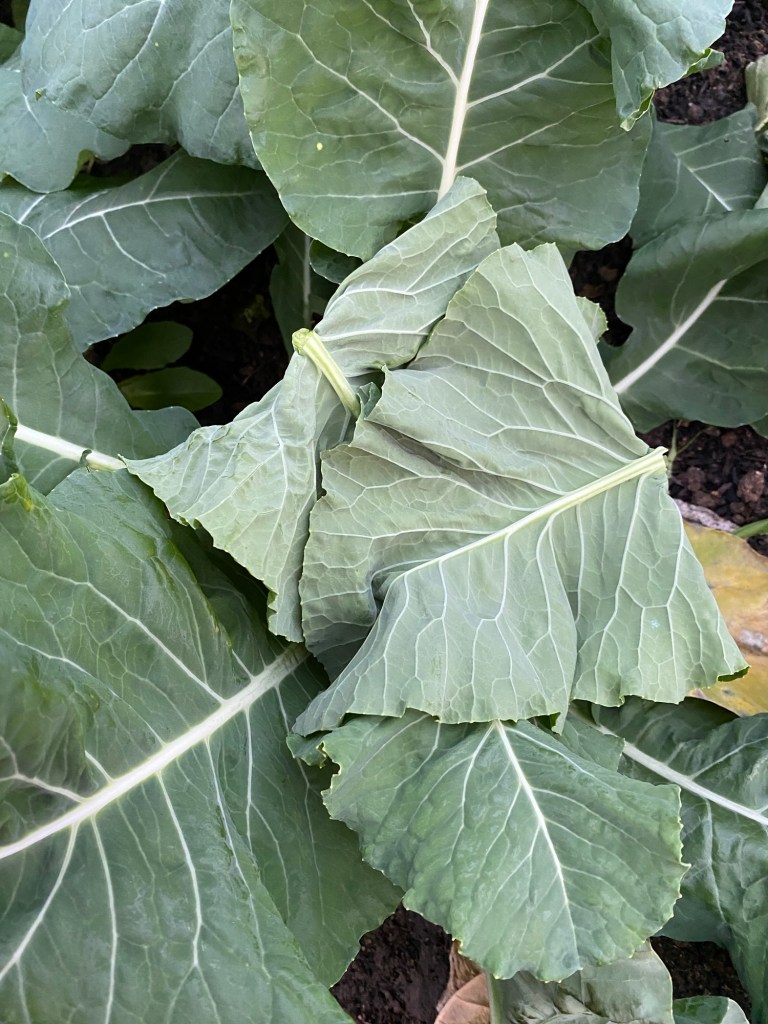
I have snapped the leaves to bend over the cauliflower ‘curds’ to reduce the oxidisation process.
What is Cauliflower Oxidisation?
It is a natural reaction between chemicals in the cauliflower and the reaction when it is exposed to air and light for a long time.
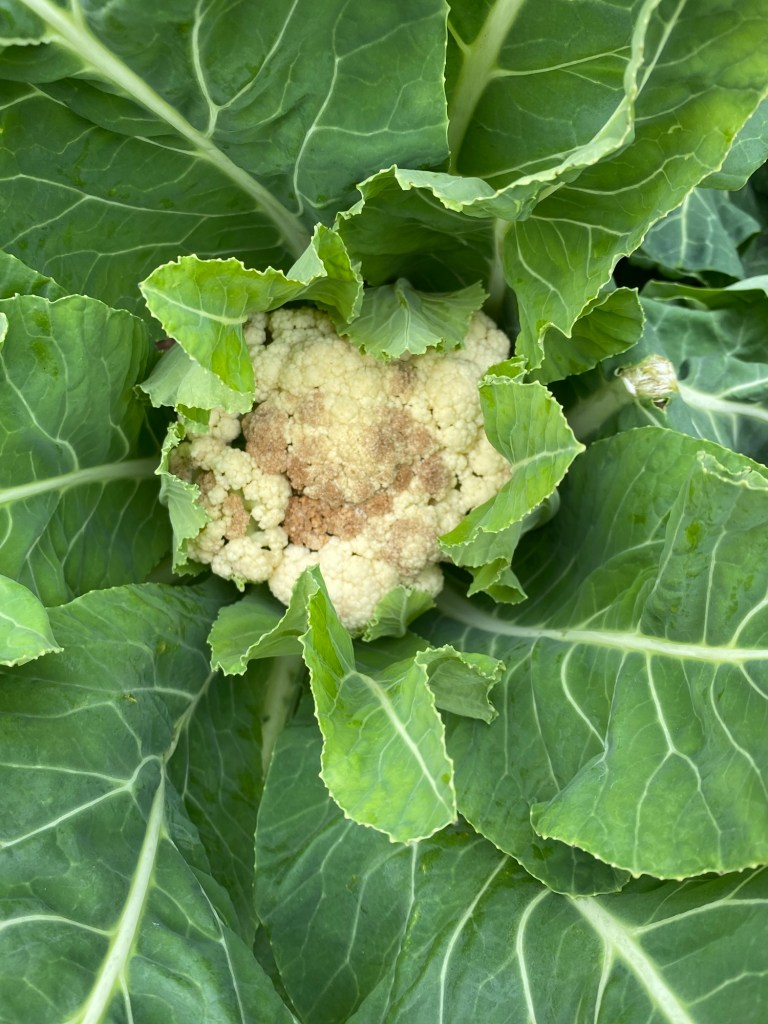
Cauliflower Oxidation looks like:
- Brown spots in a cluster on the curds,
- Black spot/s that spread to a curd or curds,
- The cauliflower may have a mushy texture due to excess water.
How to Reduce to Oxidation Process in Cauliflowers
- As soon as you see the curds forming, fold over the larger leaves to cover the curds from the light and rain.
- Keep checking on cauliflowers forming so you can get to them before the brown spots start spreading.
- If the brown or black spots are spreading, you will need to harvest the cauliflowers regardless of their size.
- Cut off the black or brown spots and the rest of the cauliflower curds are still edible.
Challenge Brassica Series
📕Part 1 – The Brassica Challenge
📗 Part 2 – Soil Replenishment & The No Dig Method
📘 Part 3 – Planting & Spacings for Kale, Brussels Sprouts & Cauliflower
📙 Part 4 – Exploring Netting, Hoops, Cages for all Budgets to Cover Brassica Plants
📒 Part 5 – Part 5 – Challenge Brassica – One Month Plantings Update
Want to Grow Winter Vegetables? Start Here
Vegetables to Sow & Plant for Autumn & Winter
Seeds to Sow in July and August for a Autumn and Winter Harvest
Growing Vegetables from Plants after the Summer season for a Winter Harvest



 sowgrowharvest.co.uk
Leave a comment