About Mid May, there is a weekend whereby all I do is pot on all my seedlings. I would prefer it if I potted plants on a bit at a time as sometimes it’s very overwhelming to do it all at once, because I don’t know what to do first. The potting on job then feels like a chore and not a pleasure.
However I have to keep reminding myself it is important to pot plants on into bigger pots because otherwise all that hard work will be for nothing and there won’t be any harvests.
‘Don’t give up at the first hurdle’.
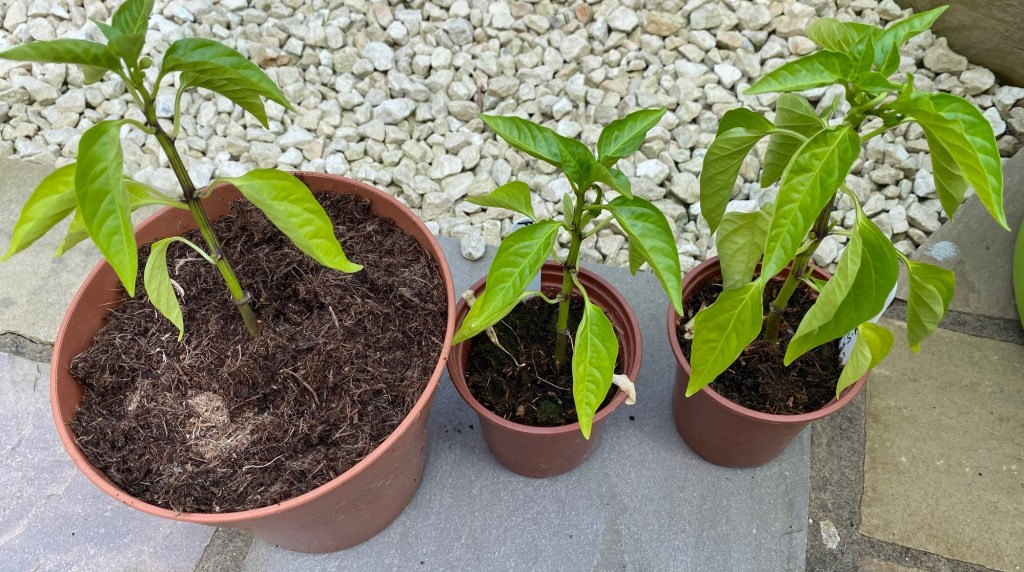
Reasons to Pot on your Vegetable Seedlings or Plants
Vegetable seeds are started in small cells or pots and there is a need for potting on to a larger pot but why is this?
1. Fresh Compost
When you pot on your new seedlings, they need a much needed nutrient boost with a new batch of compost. This will help them grow to their next stage.
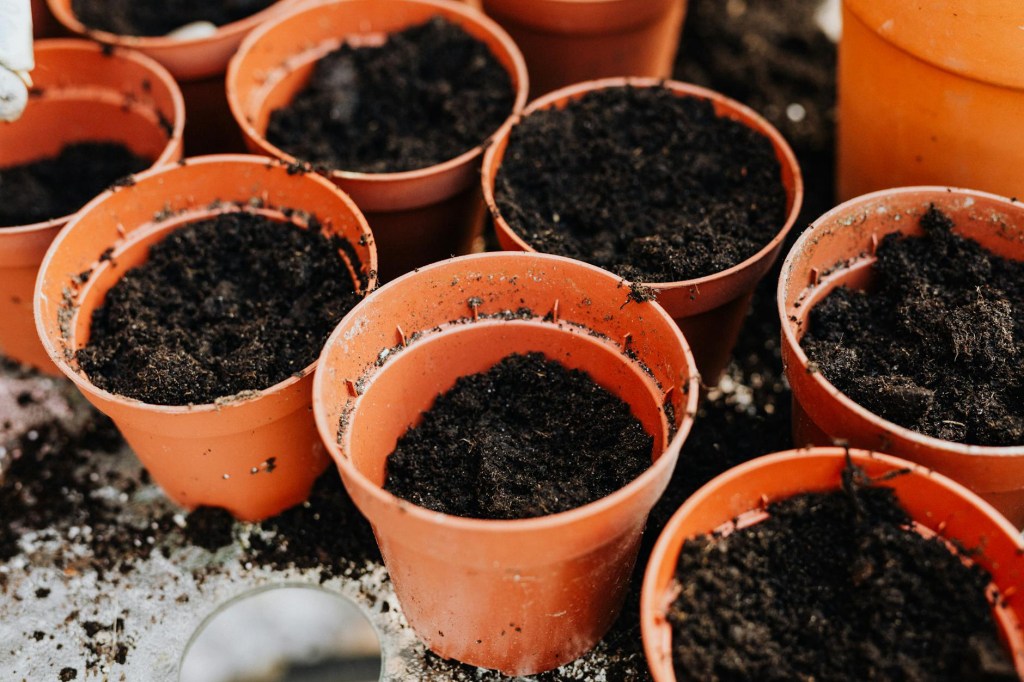
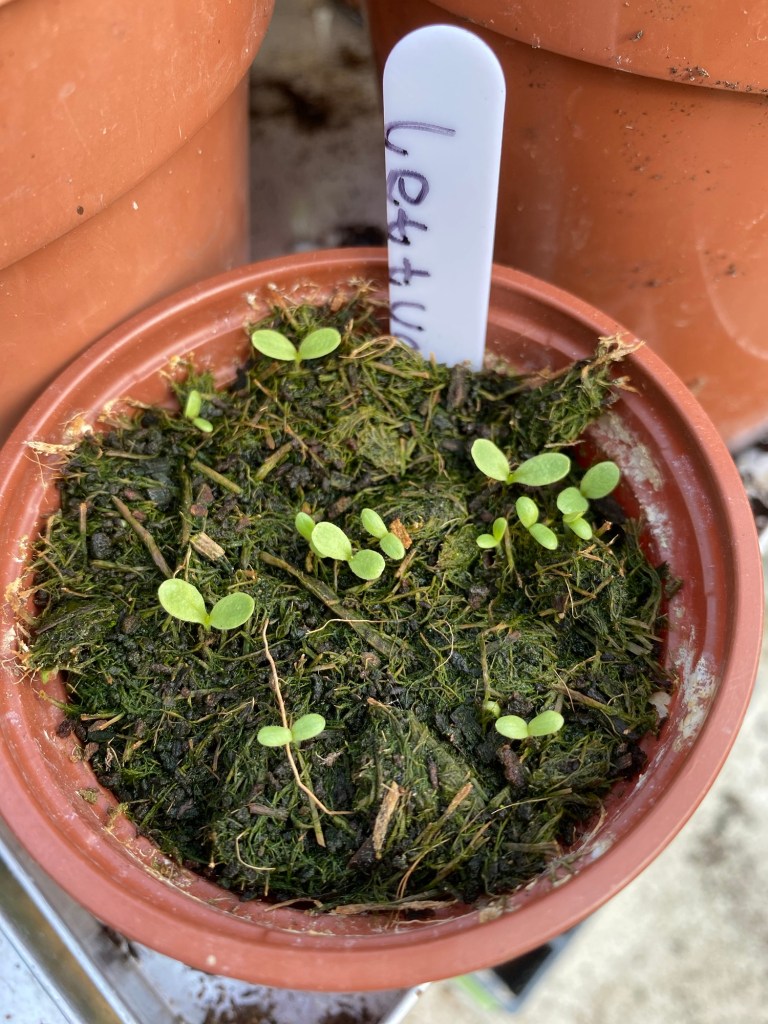
The old compost in the original pot would have been exhausted of nutrients and sometimes if the soil had dried out or been overwatered, green may have appeared on the soil surface which may cause diseases.
Your new seedlings, need fresh compost to continue growing.
2. More Space
Your new vegetable seedlings are putting on growth rapidly so they will need a bigger pot (but not too big to start with or the plant gets overwhelmed, I know how it feels!).
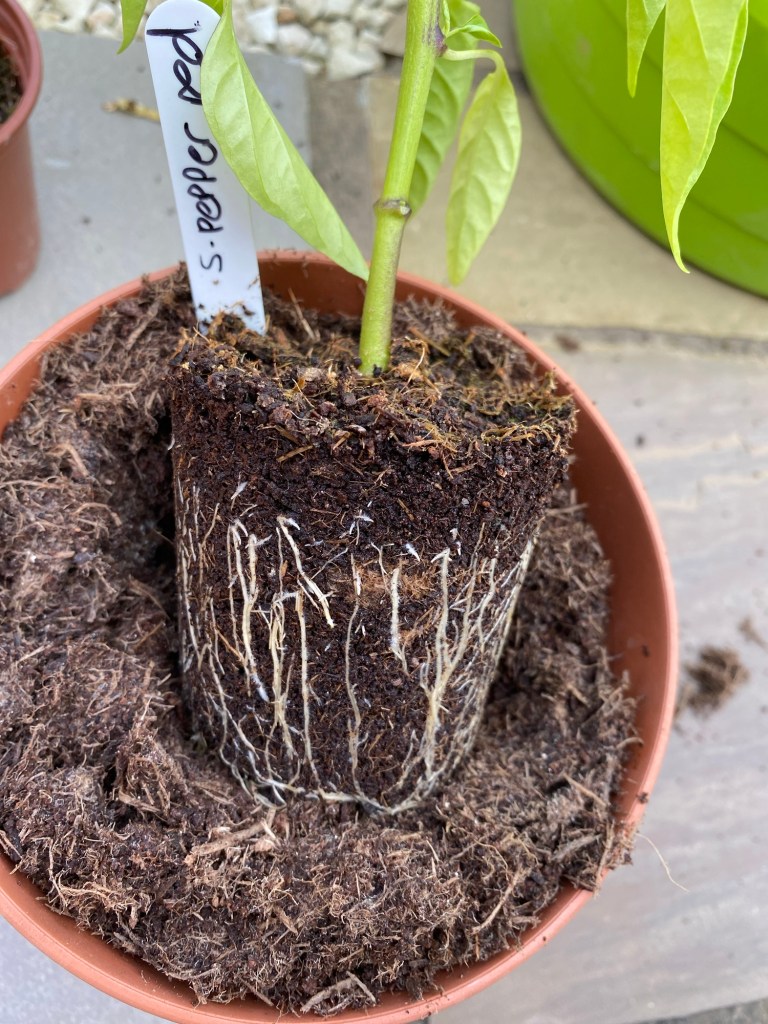
Their root system will need to be strengthened by having more space in the compost to form more roots. A good root system signals a good strong plant.
3. Plant Growth
Along with the above two points, fresh compost and more space in a new pot, there will now be more room to grow as a vegetable plant rather than a seedling.
The seedling will grow more leaves and its stem will get thicker as the plant gets larger.
4. Flowering Vegetables or fruit
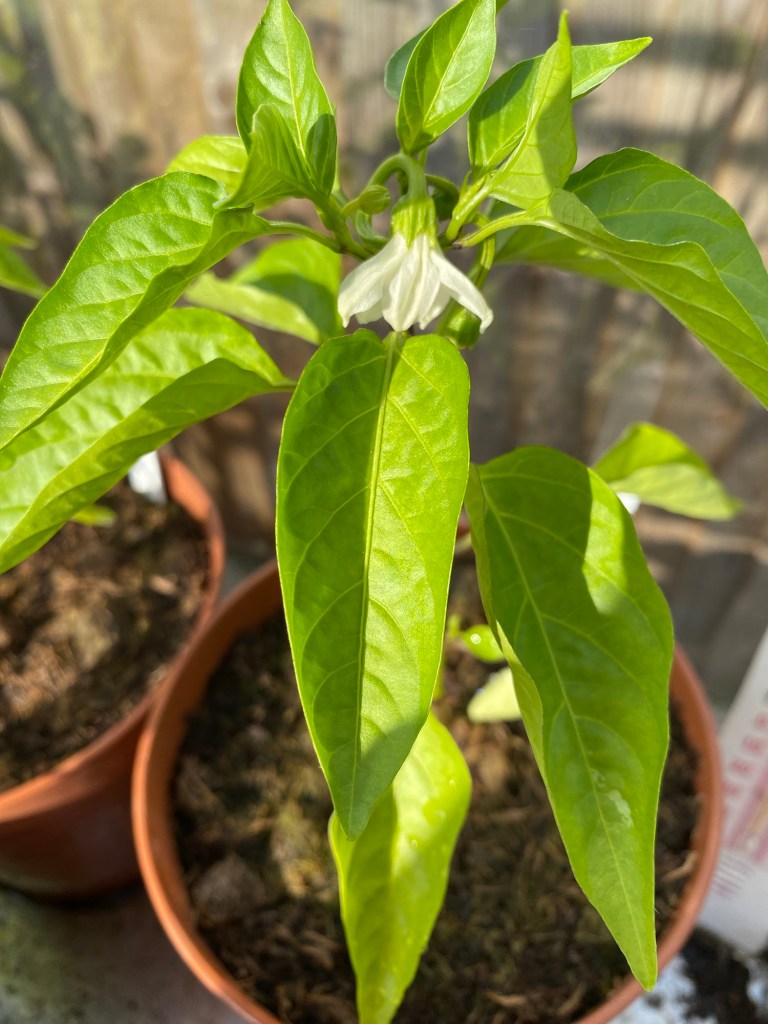
Tomatoes, cucumbers and sweet peppers are a few vegetables that I can think of that need potting on, so they can eventually flower and produce fruits or vegetables.
⭐️ Top Tip: If your sweet peppers or tomatoes are flowering, it is ok to still pot them on.
Problems occurring from Vegetable Seedlings that have Not been Potted On to bigger pots
I have had some of these problems myself so do not worry, your plants are quite resilient and should survive once you have potted them on and they have all their needs met.
- Yellowing Leaves = Means low nitrogen so pot on if necessary, add some more compost, or the plants could be too cold or too wet.
- Stunted growth or no growth = not enough nutrients, pot on if necessary or add more compost or use a different brand of compost.
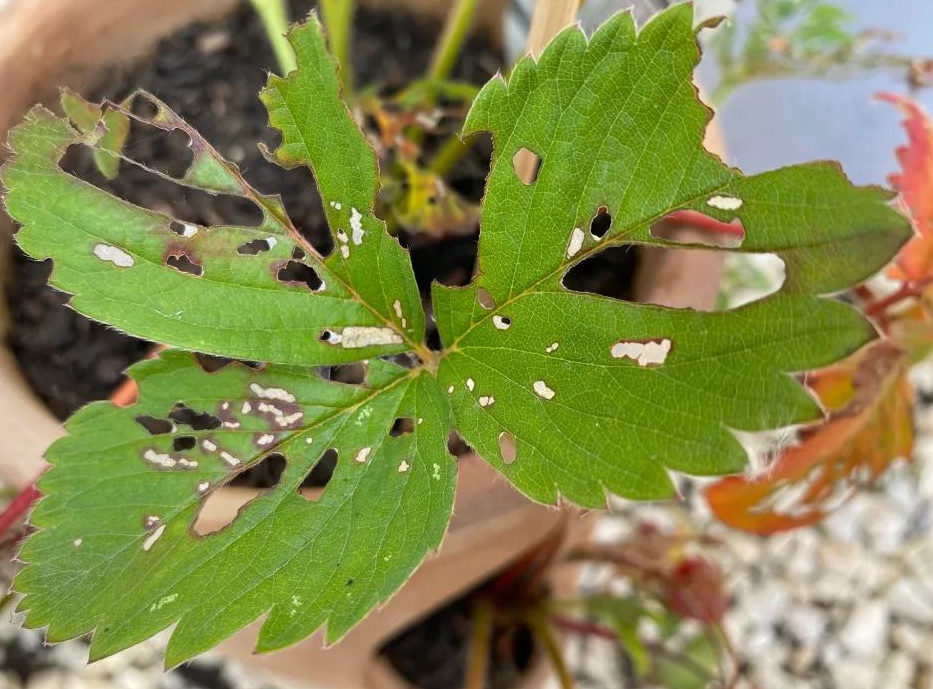
- Missing leaves and just the stem remaining = being attacked by slugs or snails. Try my slughttps://sowgrowharvest.wordpress.com/pests-how-to-grow-veg-live-with-slugs-snails/ and snail solutions.
- Leggy or tall stems = not enough light. Put them outside or in an unheated greenhouse in the sun. With tomatoes only, you can pot them on a little bit deeper than before to help the stem thicken up.
- Green moss on soil surface = too much water. You can save your seeds/seedlings by letting the soil dry out in the sun and heat. I’m finding it easy to overwater peat free compost, check the soil first by using your finger down the side of the pot. If it’s wet, it doesn’t need watering. The plants may still be ok. Keep an eye on these.
- Seeds Not germinating = Could be a number of things: old seed, compost, too cold, too wet, too dry, not enough heat.
What’s Next
🍅 Potting on your Tomato plants
🫑 Potting on Sweet Peppers with Video.
The Techniques Series
The importance of potting on from a small pot to a large pot.
How to Plan your Vegetable Garden
Space saving in the Vegetable Garden – Intercropping.
5 Symptoms of Stressed Vegetable Plants with Solutions
Growing Vegetables is like a Game of Strategy and Risk
The Little Things, Impact The Most – Looking After Your Vegetable Garden – Weeds & Mulch



 sowgrowharvest.co.uk
Leave a comment