This year there seems to be an explosion of blackfly, greenfly and green aphids on quite a number of fruit, vegetables and flowers we are growing.
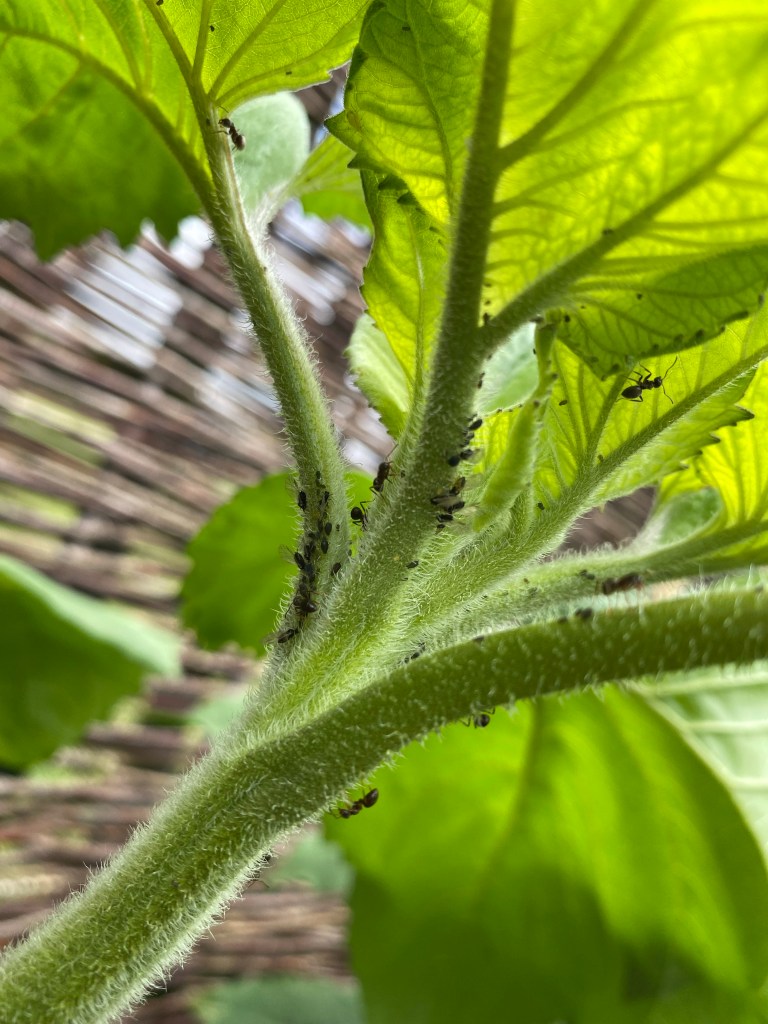
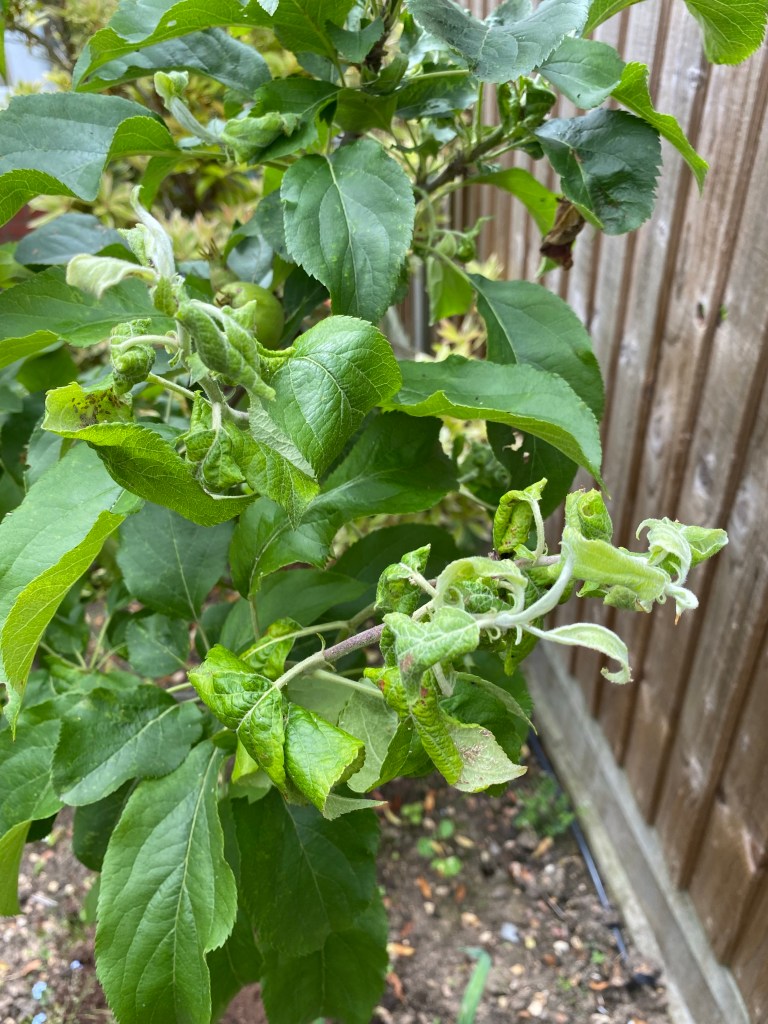
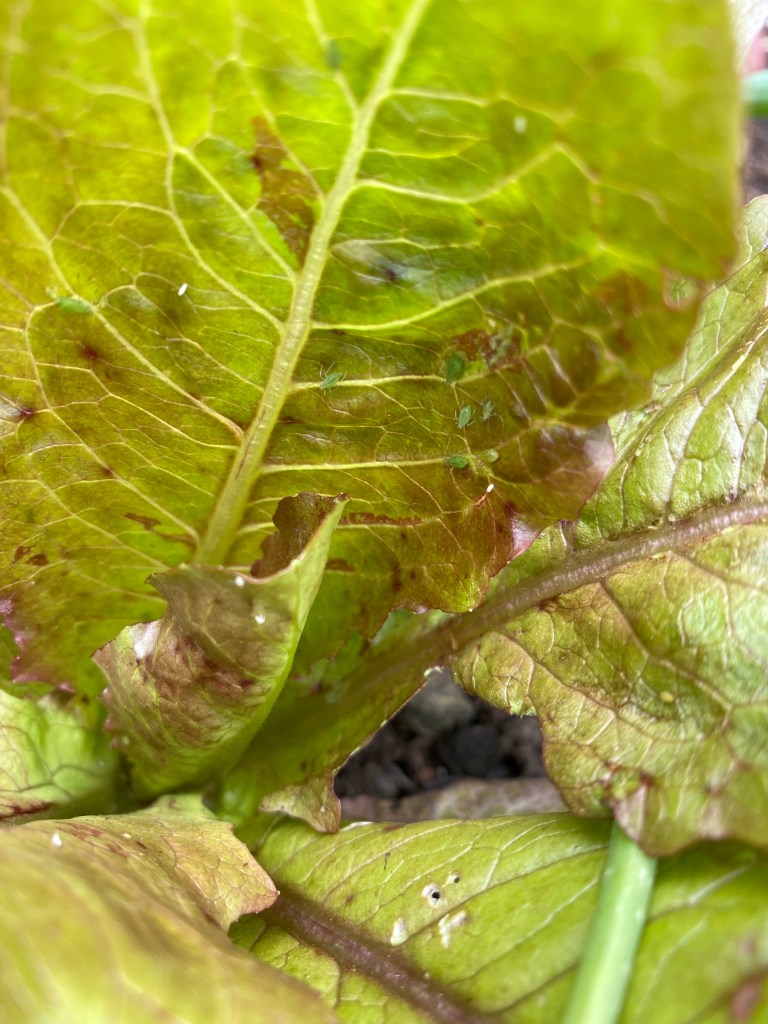
We have blackfly on our apple tree leaves which are making them curl up. We have blackfly underneath the leaves on our sunflowers and there are greenfly on the young lettuce plants.
What are Aphids, blackfly and greenfly?
Aphids feed on the sap of plant leaves and stems and suck the sap out of the leaf until it becomes deformed or curls/shrivels up. In the height of the aphid season, females breed profusely and lay hundreds of eggs a day which hatch into aphids that last 20-40 days and the life cycle continues like this usually on one plant species unless anything attacks them.
What naturally eats Aphids, blackfly and greenfly?
- Ladybirds
- Lacewings
- Parasitic Wasps
- Ladybird larvae
- Hover fly and Larve
- Small birds like goldfinches
- Spiders
- Aphids can also be affected by viruses on the plant and temperature and weather. They don’t like extreme heat or cold and snow or heavy rain.
Why do you always see Ants with blackfly or greenfly and Aphids?
Some species of ant farm aphids, i.e. they round up the aphids who continue to suck their sap out of the plant, leaves or stem. The sap is called honeydew and is a very sweet, sticky substance. At the point where the aphid has punctured the plant, the ants will then feed on the sap as well. They will also ‘milk the aphids’ by rubbing their antenna onto the aphids to release the sap from their bodies as well. Lovely!
I always thought that the Ants weren’t a problem however I have just learnt that Ants don’t help the problem of aphids. Ants help farm the aphids which keep them on the plant doing more damage. Ants don’t damage the plants themselves, they just keep the aphids together who continue to destroy the plants so they don’t help the matter. Now you have aphids and ants on your plants.
How do I know if I have Aphids on my plants?
- Curled up leaves,
- Wilting,
- Stunted growth,
- Brown leaves,
- Plant has died.
- The aphids literally suck the goodness out of the cells of the plant.
How do I get rid of Aphids without chemicals?
I don’t agree with putting chemicals on your edibles because you will be eating them at some point and the whole point of growing your own vegetables is that there’s no chemicals on them. So to me it seems silly to go and add chemicals just to remove a pest. You might as well go and buy your lettuce from a supermarket if you want ones grown with pesticides.
So how do I get rid of the aphids without the use of chemicals. The answer is naturally or human intervention.
1. Squish off the aphids with your fingers.
This is the number one direct method of removing aphids from your plants. You could fire them off with water from a hosepipe but it isn’t as accurate. Remember to wear gloves or wash your hands afterwards as they do carry bacterial diseases. Using this method you will have interrupted the breeding cycle to give your plants or trees a rest from the onslaught. The only downside is you will have to keep doing this method for sometime until you irradiate the pest population.
2. Buy some Ladybirds
Yes, you can buy Ladybirds for your garden from reputable online retailers. They come in small packets with ladybird food to get them going in your garden and you get instructions on how and when to release them into your garden.
These are slightly controversial as that the ladybird population wasn’t there before so why should you introduce them now. There are alot of positives to invite them in to your garden and you could encourage them to stay by putting up a ladybird house.
3. Use your own homemade soap solution
Make a homemade soap spray to get rid of the aphids. You will need to use a pure soap called Castile because washing up liquid is too harsh.
- You will need:
- A spray bottle, I got mine in the Pound Shop.
- A few tablespoons of Castile organic Soap base, I got mine from Amazon.co.uk (approx £5 for 500ml)
- a bucket of water
Mix the soap base with water and put in a spray bottle. Spray the infected leaves with the soap spray and repeat daily until aphids have gone.
4. Use sacrificial plants to lure Aphids elsewhere
There are a number of plants which are aphid magnets. You can try and divert the aphid population to some of these plants to reduce the destruction from aphid damage around your garden. Try growing the following plants to help the situation:
- Nasturtium
- Cosmos
- Mustard
- Dahlias
- Asters
5. Grow plants Aphids don’t like near your Aphid problem areas
Aphids don’t like:
- Onions
- Garlic
- Chives
- Allium (bulbs)
- Catnip
6. Encourage natural predators into the garden with plants and houses
Encourage the natural predators that attack aphids into your garden by growing plants like clover, fennel and dill to attract hover flies and ladybirds. Put up insect houses and areas for insects to rest like stick piles which are out of the way.
Encourage birds with a bird bath or water and a sheltered spot for them to sit up high like fences.



 sowgrowharvest.co.uk
Leave a comment