
Chives, have you ever tried growing them? They are the unsung heroes of the vegetable garden and the gift that keeps on giving!
All About Chives
Chives are part of the allium family and are a perennial which means they can live in the ground for up to 3 years or more.
Chives can be sown from March to August outside or in pots to overwinter. Germination requires temperatures from 15 to 21 degrees centigrade.
Chives love fertile soil rich in compost and free draining soil so Raised Beds are perfect for growing chives.
My Experience with Chives
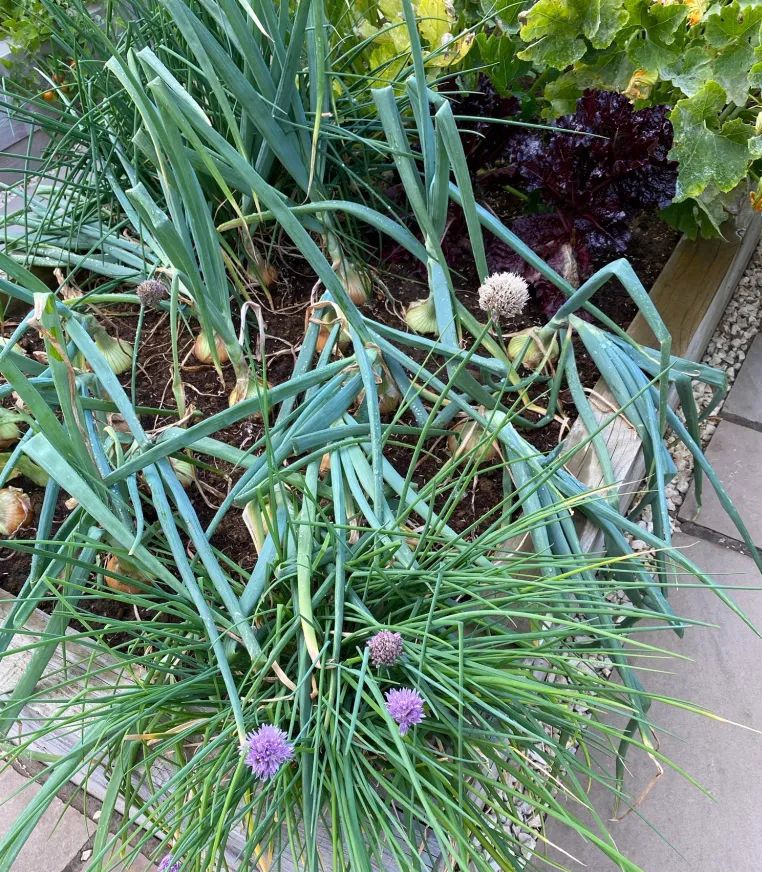
I overwintered my Chive plant as an experiment last summer.
I cut the plant down at soil level after the chive flowers died back and left it outside planted in a raised bed.
The British autumn and winter weather was typically wet, windy and cold but the chive plant still survived.
Reasons to Grow Chives in the Vegetable Garden
- The bees and insects love them.
- The chive stems can be cut and used for chive pesto, chives on new potatoes, etc.
- Chive flowers when pink and just opened are edible, great for garnishes and have a mild taste but don’t eat them all! Save some for the seeds.
- When the flowers die back, you can collect the tiny black seeds for sowing next year.
How to Harvest Your Own Chive Seeds
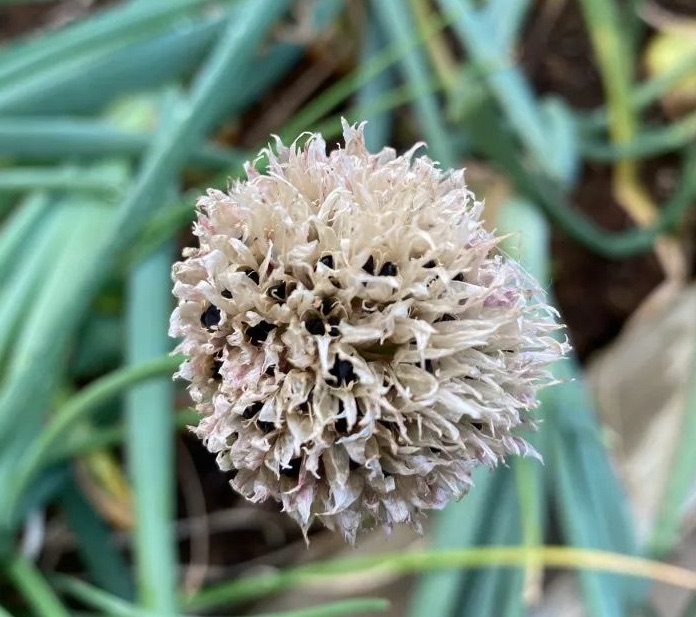
To get your free Chive seeds, wait for your pink chive flowers to turn into white seed heads. On a dry day, try harvesting your own seeds and Save for sowing next Spring.
You will Need:
- A pot like a plastic cup or bowl – to harvest the seeds in,
- Air tight seed pot or paper bag – to store the seeds in.
- A Chive flower that has turned from lilac to white with black seeds visible on top.
Step by Step Instructions
- Whilst the flower is still attached to the plant, bend the stem and shake the tiny black seeds out into a pot or cup.
- You may need to run your finger over the top of the crispy flower head to release the seeds.
- Tip your chive seeds into an air tight container or a paper bag and seal it.
- Store seeds in a cool place for sowing next year in Spring.
Video – How to Harvest Chive Seeds
Caring for your Chive Plants Overwinter
There are a few ways to Care for Chive Plants Overwinter that you already have in your raised beds.
- When the plant has died back and starts getting yellow and brown leaves, cut the stems and leaves down to soil level. Leave in raised beds to overwinter.
- If you need to move your Chive plant to a pot or another location if you need the space for growing. Dig it out of the ground and put in a pot. Cut it down when it dies back and put the pot in the greenhouse to overwinter it.



 sowgrowharvest.co.uk
Leave a comment